Starting Nursery
Before your child starts, we will talk with you about their routines, interests, care needs and the best way to support their transition into nursery.
Settling-in visits help children become familiar with their room, their key person and the adults who will care for them. We will work with you to share updates and support the move from home into the nursery day.
There are currently no spaces available, with the next expected availability in August 2027. To ask about future spaces or arrange a visit, use the Book a Visit page.
Ofsted Inspection
Our latest Ofsted inspection took place in January 2024. The report records Good judgements across all inspection areas.
Read the January 2024 Ofsted report
What to Bring
- Spare clothes labelled with your child’s name
- Weather-appropriate outdoor clothing
- Anything else your child may need (will confirm)

A Typical Day At Nursery
Children benefit from a balance of familiar routines, play, rest and outdoor time across the day. A typical day may include:
1
Arrival and settling in
Children are welcomed into the room and supported to settle into the day.
2
Morning play and activities
Planned and child-led activities help build confidence, language and curiosity.
3
Snack and lunch
Mealtimes are part of the nursery routine and support independence and social skills.
4
Outdoor play
Children enjoy fresh air, movement and exploration in our enclosed outdoor areas.
5
Rest and quiet time
Quiet activities and rest are built around each child’s age and individual needs.
6
Stories, songs and home time
The day ends with familiar routines and handovers to families.
Meals, Sleep And Routines
We work with families to understand each child’s dietary needs, sleep routines, personal care and comfort arrangements. Please share changes to your child’s routine so that staff can keep their care consistent and responsive.

Healthy Screen Habits
Young children learn best through warm interaction, reading, play and conversation. We keep screen use limited, purposeful and supervised, and prioritise screen-free time for meals, sleep, movement and play.
- Under two years: avoid screen time except for shared activities that encourage bonding and interaction.
- Ages two to five: aim for no more than one hour a day, and less if possible.
- Choose slow-paced, age-appropriate content and avoid social media, unsuitable material and AI toys or chatbots.
- Watch and discuss content together rather than leaving young children to use screens alone.
Read our Screen Use Policy or visit the government screen-use guidance.
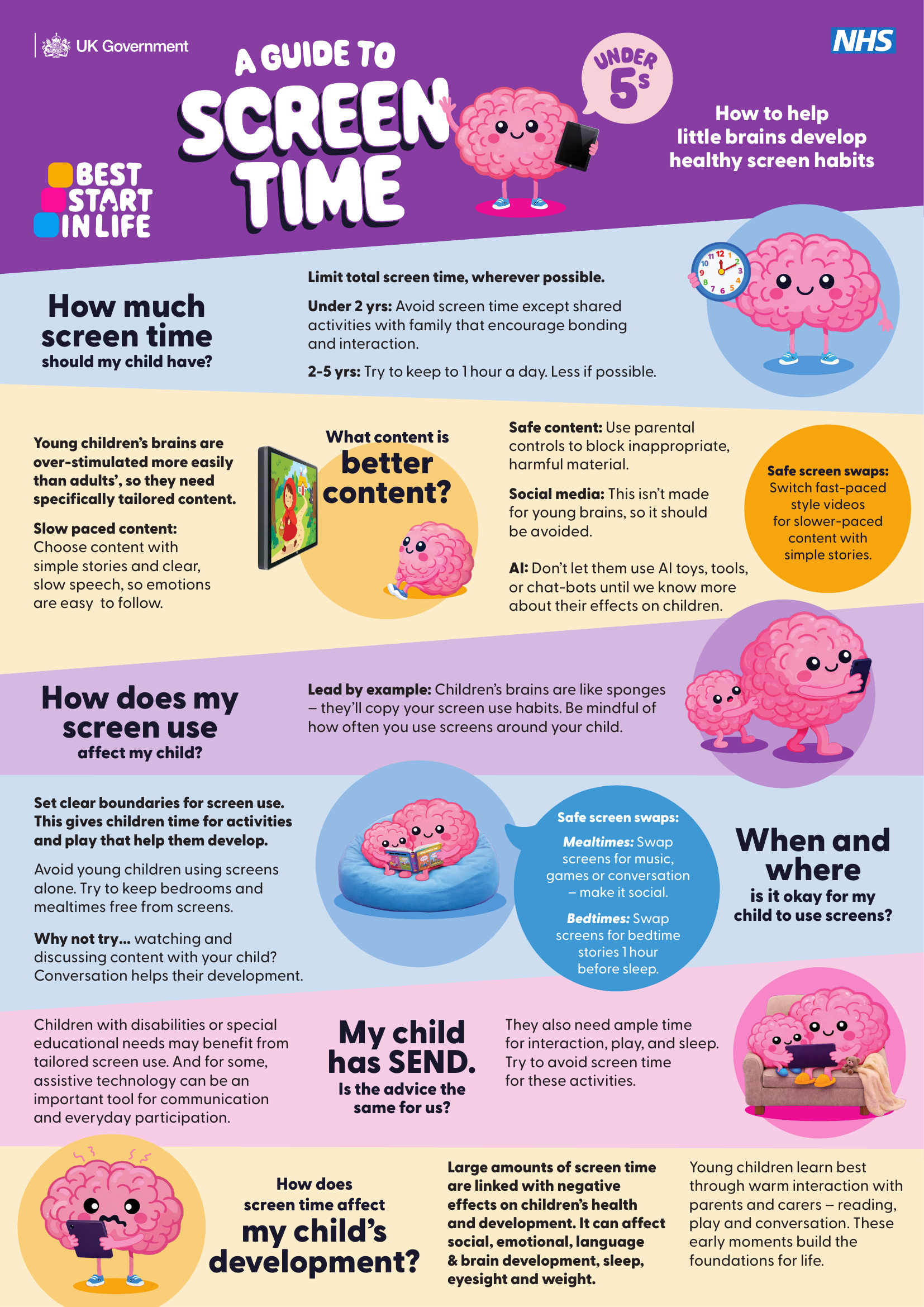 Open the screen-time guide full size
Our Values
- Being kind to each other.
- Being able to express our emotions.
- Taking turns and sharing.
- Taking care of our nursery environment.
Parent Resources
We recognise that families may have questions, big or small. Please speak to a member of staff if you need support or want to talk through your child’s routines, development, feelings or screen use.
Registration form